
Road salt season is here. Learn why salt residue damages Toronto floors and carpets, how to clean it safely on each surface, and when a professional steam clean makes sense.

Nov 1, 2026
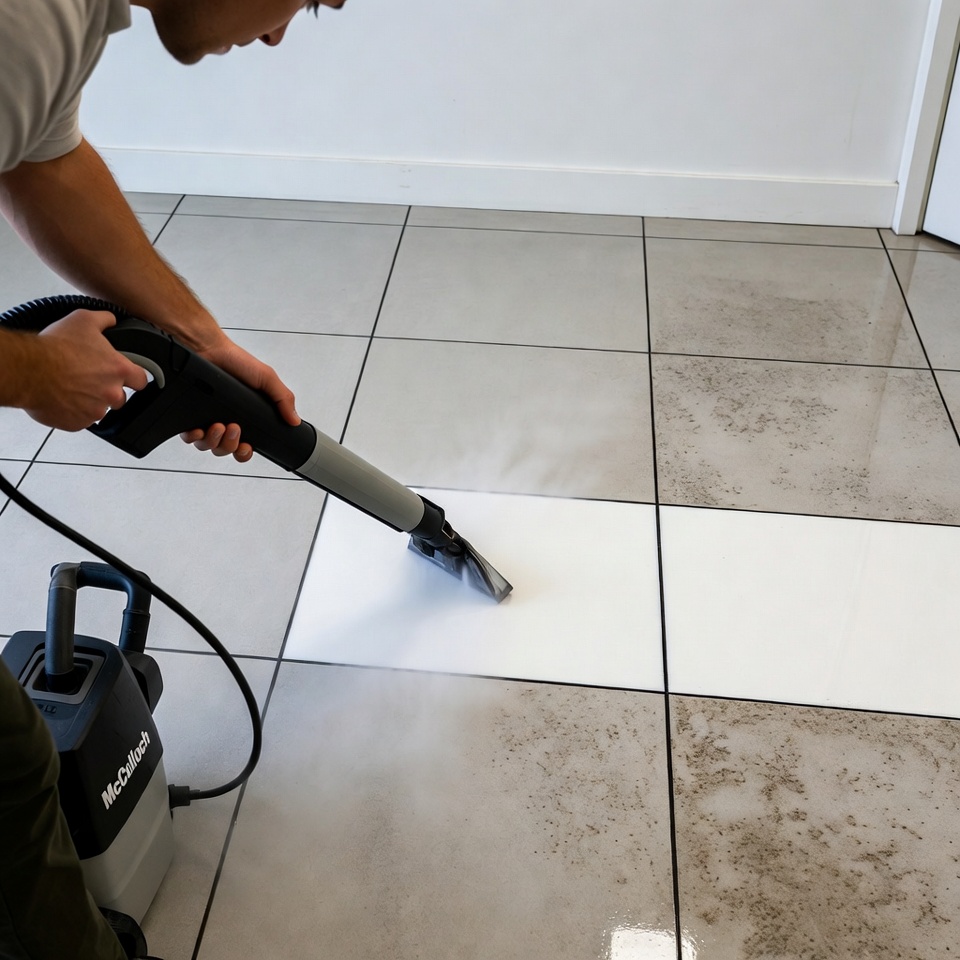
Every Toronto winter follows the same script. The first snowfall arrives, the city lays down road salt, and within a week there is a white, crusty line across the front hall. Boots track it in, it dries on the floor, and the next pair of boots grinds it deeper. By March, many homes and offices have dull hardwood, grey grout and carpets that feel stiff near the door.
The good news is that salt damage is mostly preventable, and most of it can be cleaned if you deal with it early. Here is how to do it on every type of floor, and when it makes sense to call in a professional.
Salt causes trouble in three ways. First, the crystals are abrasive. Every step drags them across the floor like fine sandpaper, slowly scratching finishes and wearing down the protective coat on hardwood and laminate.
Second, salty slush dries into a white film. On tile it settles into grout lines; on carpet it binds to the fibres and makes them feel rough. Some ice melters also leave an oily or slippery residue that a regular mop only spreads around.
Third, salt holds moisture. Damp, salty residue sitting in grout, along baseboards or under an entry mat keeps those areas wet far longer than they should be, which is where staining and odours start.
One rule applies everywhere: remove the dry salt before you add water. Sweep or vacuum first. If you mop straight away, you dissolve the salt and spread a thin layer of brine across the whole floor.
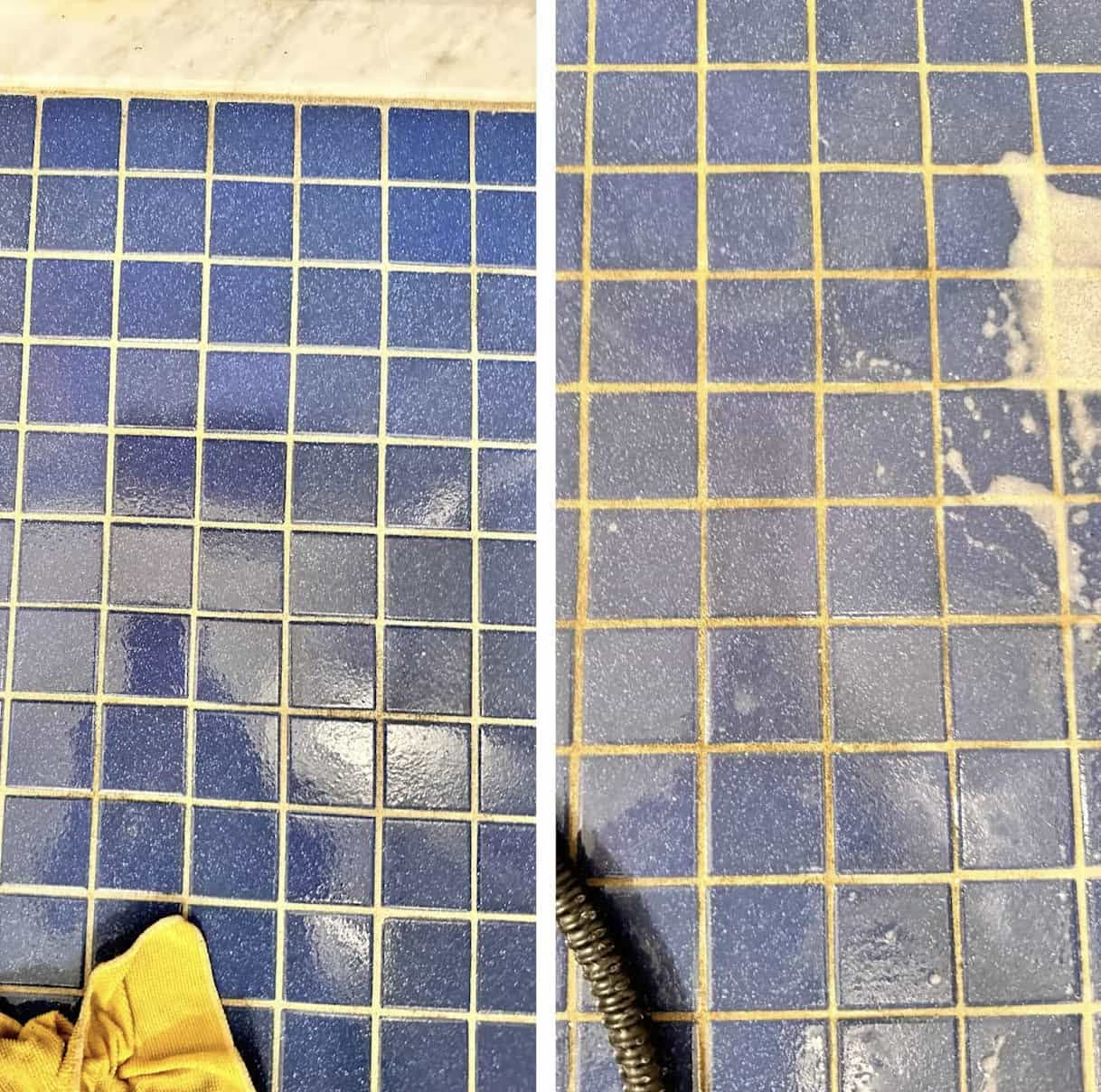
Vacuum or sweep, then mop with warm water and a pH-neutral floor cleaner. For grout, work along the lines with a soft brush, then rinse with clean water so no residue is left to dry. Change your mop water often; once it turns cloudy, you are putting salt back on the floor. For grout that has already gone grey, hot steam is one of the most effective ways to lift buildup out of the lines.
Vacuum with a soft brush head so you are not dragging crystals across the finish. Then wipe with a damp, well-wrung microfibre cloth and a cleaner your flooring manufacturer approves, and dry the area right away. Avoid soaking these floors, and do not use steam on hardwood or laminate, since heat and moisture can damage the boards and the finish.
Let the area dry completely, then vacuum slowly to pull out loose salt. For white marks, a common home method is a mix of equal parts warm water and white vinegar. Test it on a hidden spot first, then blot the stain with a clean cloth; do not scrub, which pushes residue deeper. Blot again with plain water to rinse, then press with a dry towel. If the stain keeps coming back as the carpet dries, the salt is deep in the fibres and needs hot water extraction.
Prevention is far cheaper than repair. A few simple habits make a big difference:

If salt has been building up for weeks, home cleaning often only treats the surface. Professional hot steam cleaning uses high heat and strong extraction to dissolve residue in grout and carpet fibres and pull it out, without leaving soap behind to attract more dirt. One Vaughan family saw the difference first-hand in our chemical-free steam cleaning story.
Many homeowners book a deep clean twice in the season: once in early winter to start fresh, and once in March or April to reset the entry, carpets and grout after the last snow.
Businesses feel salt season even more. Lobbies, elevators and hallways see hundreds of boots a day, and a dull, streaky entrance is the first thing clients notice. Daily entry maintenance and periodic machine scrubbing keep floors safer and looking professional. If you manage a workplace, our posts on office cleaning in Toronto and how to clean a commercial building explain how to build that routine.
No. Steam can damage hardwood and laminate. Use a damp microfibre cloth and a manufacturer-approved cleaner, then dry the floor right away. Steam works best on tile, grout and suitable carpets.
Salt that has soaked deep into the fibres wicks back to the surface as the carpet dries. Hot water extraction pulls it out from below instead of only treating the top.
During snowy weeks, vacuum the entry daily and mop a few times a week. A full deep clean once or twice per season keeps grout and carpets from building up residue.
Super Cleaners provides regular, deep and hot steam cleaning for homes and offices across Toronto, Vaughan, Richmond Hill, Mississauga and the GTA. Request a free quote, email info@thesupercleaning.ca or call (289) 809-9818. Still comparing companies? Read our guide to cleaning services in Toronto first.



Efficient Cleaning, Exceptional Results.
(289)809-98-18 Serving 24/7
info@thesupercleaning.ca