

How to Clean a Commercial Building: A Step-by-Step Guide
Cleaning a commercial building requires more than basic janitorial work. Offices, kitchens, bathrooms, locker rooms, stairs, and long hallways all demand different cleaning approaches and a clear plan. This guide explains how to clean a commercial building from start to finish using a structured, repeatable workflow that keeps the job efficient and the results professional.
Step 1: Walk the Building and Set the Scope
Before you begin cleaning, walk through the entire building. Look for trash left behind, cluttered rooms, storage areas full of old items, and any spaces with heavy buildup. Many clients request a “deep clean” when the space actually needs a full move-in or move-out reset. Be transparent about what you see and explain that decluttering and heavy trash removal take more time and will affect the price. Setting expectations now prevents misunderstandings later.
Step 2: Plan Your Route and Clean Your Way Out
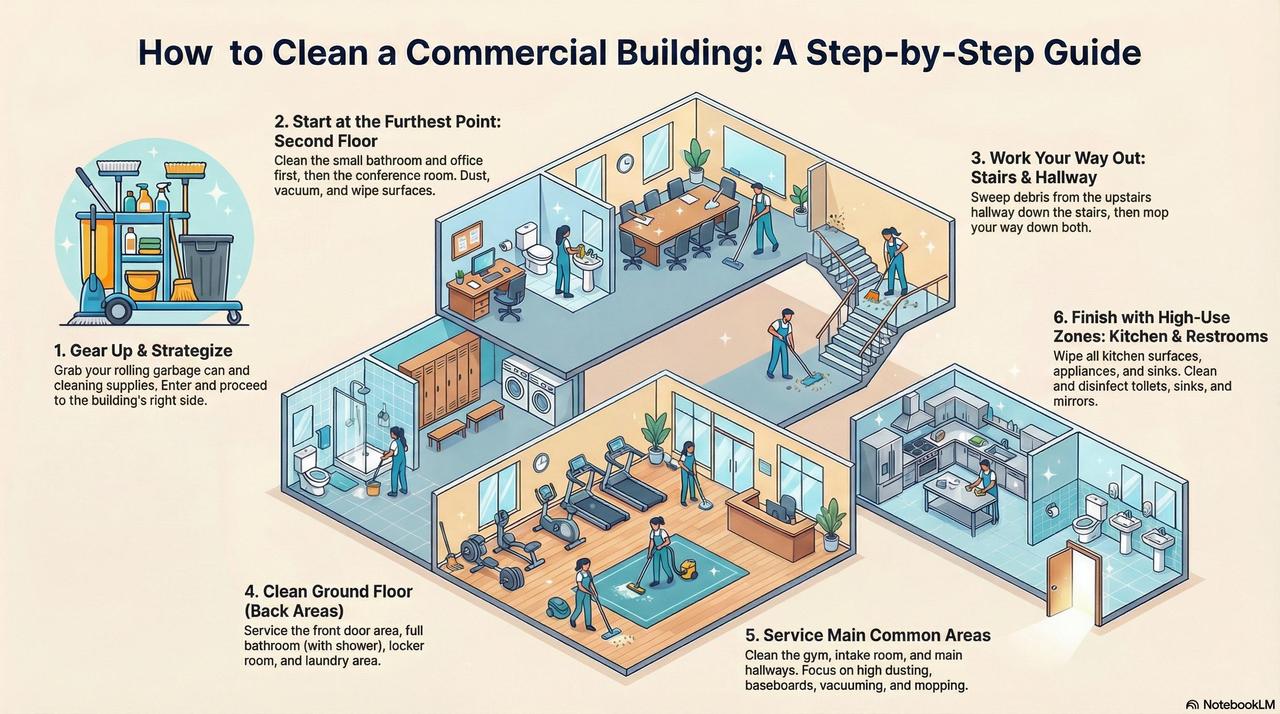
The most important rule in commercial cleaning is to always clean your way out. Start at the farthest point from the exit and move toward the main entrance. This keeps you from stepping on freshly cleaned floors and makes your workflow more organized. In multi-level buildings, start on the upper floor and move systematically toward the front door, leaving the entrance and main hallways for last so they look perfect when you finish.
Step 3: Start With the Heaviest Cleaning Areas
Begin with the areas that need the most attention, such as commercial kitchens, locker rooms, or heavily used bathrooms. Work from top to bottom in each space. Start with high dusting, then clean walls and surfaces, then fixtures, and finish with the floors. If you have a team, assign your most experienced cleaners to these heavy-duty areas so deep grime and buildup are handled properly the first time.
Step 4: Clean Offices and Conference Rooms
Once the toughest areas are under control, move into offices and conference rooms. Follow the route you planned at the beginning. In each room, remove trash, wipe down desks and tables, and straighten items where needed. Check windows and glass for fingerprints and smudges and spot clean if necessary. Finish by vacuuming carpets or mopping hard floors, paying attention to corners and baseboards so the rooms feel truly finished, not just quickly wiped.
Step 5: Clean and Disinfect Commercial Bathrooms
Bathrooms are one of the first places people judge cleanliness. Start with high dusting around vents, lights, and corners. If there is a shower, apply your cleaning product and let it sit while you work on the rest of the room. Clean toilets, sinks, countertops, and mirrors. Wipe down rails, dispensers, and toilet paper holders. Remove the trash and replace liners. Return to finish the shower, then vacuum or sweep and mop the floor. Using the same sequence every time keeps bathrooms looking clean and sanitary on every visit.
Step 6: Deep Clean the Kitchen or Break Room
Kitchens and break rooms are high-traffic areas that quickly collect spills, crumbs, and grease. Wipe all countertops and tables, then spot clean cabinet doors. Scrub and polish sinks so they look bright and fresh. Clean the stovetop and the front of the oven if present. Do not forget smaller appliances such as coffee machines, toasters, and refrigerators—cleaning even the exterior of these items makes the space feel much more organized. Once surfaces are done, remove trash and finish with the floors, including edges and baseboards.
Step 7: Clean Specialty Areas
Some commercial buildings include laundry rooms, intake rooms, or waiting areas. In a laundry room, start with high dusting, then wipe the outside of washers and dryers and lightly dust shelves. Always clear the lint trap in the dryer before cleaning the floor. In intake or waiting rooms, focus on a fresh, welcoming look. Wipe the reception desk, clean chairs and ledges, remove all trash, and then vacuum or mop the floors so the space feels neat and professional.
Step 8: Clean Stairs and Hallways
Stairs and hallways connect every part of the building and strongly influence how clean the property feels. On stairways, sweep or vacuum from top to bottom, letting dust and debris move downward, then collect and remove it at the bottom. Mop your way down the stairs so you are stepping onto dry or nearly dry surfaces as you go. In hallways, sweep or vacuum first, then mop. While you are there, quickly spot clean glass, doors, signage, and wall-mounted items such as fire extinguishers.
Step 9: Do a Final Walkthrough and Establish a Routine
When the cleaning is finished, do a final walkthrough and look at the building through the client’s eyes. Check the entrance area, bathrooms, and kitchen or break room first, since these are the most noticeable spaces. Make notes about anything you might improve during the next visit. Then turn this system into your regular checklist for that building—same route, same order of rooms, and the same basic steps each time. Once the deep clean is done, following a consistent routine on a daily, weekly, or bi-weekly schedule keeps the building looking professionally maintained without extra stress.
Conclusion
Learning how to clean a commercial building effectively comes down to having a clear, organized process. With a structured workflow, cleaning becomes predictable and efficient, and the results are easier to repeat. By following this step-by-step guide, you can keep commercial properties looking polished, sanitary, and well cared for, while saving time and delivering better results for your clients.