
Once the furnace kicks on and the windows stay shut, dust builds up faster. Learn why winter makes Toronto homes dustier, where dust hides, and a simple room-by-room routine to keep the air and surfaces cleaner.

Nov 6, 2026

Every November it happens in Toronto homes. The furnace switches on, the windows stay closed until April, and suddenly the TV stand needs dusting every other day. Dark furniture looks grey by the weekend, the vents have a fuzzy edge, and the air feels dry and stale.
You are not imagining it. Heating season changes how air and dust move through a house. The good news is that a few targeted habits, plus the right cleaning order, make a noticeable difference. Here is why it happens and what to do about it.
In spring and summer, open windows and doors bring in a steady exchange of fresh air. In winter that exchange drops sharply. Dust from fabrics, skin, pets, paper and outdoor dirt tracked in on boots has fewer ways to leave, so more of it settles on surfaces.
Most GTA houses and many condos heat with forced air. Every time the system runs, it pulls air through the return vents, pushes it through the ducts and blows it back into each room. Dust that would normally settle in a corner gets lifted and redistributed, then lands on shelves, baseboards and electronics.
Cold outdoor air holds little moisture, and heating it makes indoor air feel even drier. Dry air builds static, and static makes dust stick to screens, plastic surfaces and pet hair. That is why the TV and the computer monitor seem to attract dust faster in January than in July.
More hours at home means more cooking, more laundry, more foot traffic and more fibres shed from blankets and clothing. Add holiday guests and winter boots, and the dust load climbs quickly. Boots also bring in salt and grit, which we cover in our guide to protecting floors from winter salt stains.
Dust is not only a cosmetic problem. According to Health Canada's guidance on dust and dust mites, both dust and dust mites can trigger allergic reactions and aggravate conditions such as asthma, and young children are at greater risk because they spend so much time close to the floor. Dust mites live in beds, carpets, upholstered furniture and soft toys, which are exactly the surfaces we use most in winter.
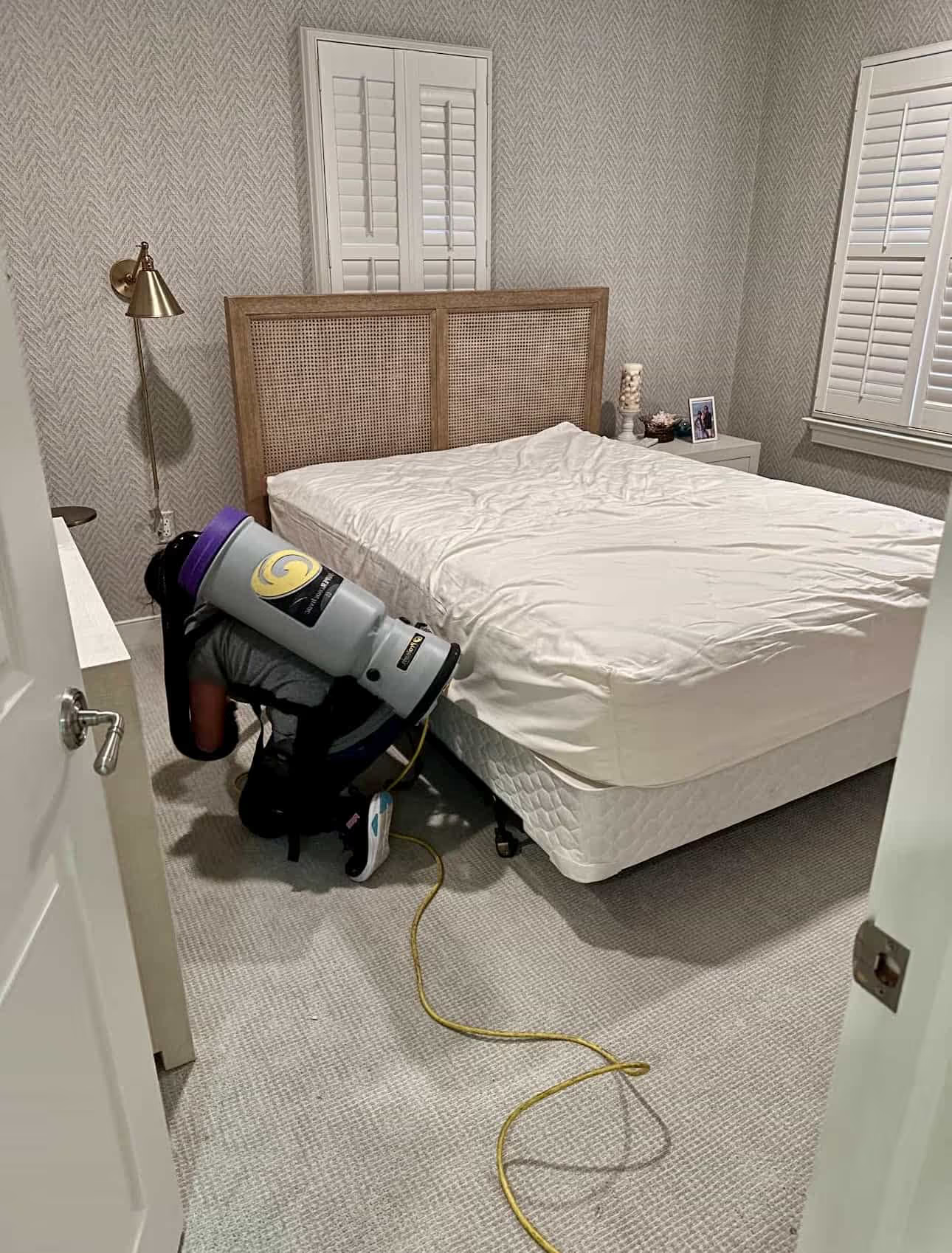
The most important rule is simple: clean from top to bottom, and dust before you vacuum. If you vacuum first and dust afterwards, everything you knock off the shelves lands on the clean floor.
Begin with ceiling fans, light fixtures, the tops of door frames, tall shelves and the tops of cabinets. An extendable duster or a microfibre cloth on a pole works well. A fan-blade trick: slide an old pillowcase over each blade and pull it back so the dust stays inside.

Dry dusters tend to push dust into the air, where the furnace simply moves it to another room. A slightly damp microfibre cloth traps it instead. Health Canada recommends the same approach: clean floors and surfaces with a damp mop or cloth to keep dust levels down.
Turn the system off, unscrew or lift out the vent covers and return grilles, and wash them in warm soapy water. Dry them completely before putting them back. Vacuum the visible opening with a brush attachment while the cover is off. This is one of the fastest ways to make a room feel fresher.
Vacuum carpets, rugs, curtains and upholstered furniture, moving slowly so the machine can pull dust from the fibres. If possible, use a vacuum with a HEPA filter, which traps fine particles instead of blowing them back out. Do not forget under beds and sofas.
Once everything above has been dusted and vacuumed, damp-mop hard floors and wipe the baseboards. Doing floors last means you only do them once.
The furnace filter is your home's first line of defence against circulating dust. A clogged filter cannot trap much, and it makes the system work harder. Check it regularly during heating season and replace or clean it as the manufacturer recommends. Health Canada's healthy home checklist also advises having your furnace and ventilation system inspected regularly by a qualified technician. If you are not sure which filter your system takes, the size is usually printed on the edge of the old one.
Humidity is a balancing act in winter. Too dry, and static makes dust cling while skin and sinuses feel irritated. Too humid, and you get condensation on windows, which can lead to mould and helps dust mites thrive.
Health Canada's mould prevention guidance recommends keeping relative humidity between 30% and 50%, and its dust mite guidance suggests aiming for 35% to 50%. An inexpensive hygrometer from any hardware store will tell you where your home sits. If you see water collecting on the inside of your windows on cold mornings, the humidity is likely too high for your windows.
If you use a humidifier, clean it often. Health Canada advises regularly cleaning and disinfecting anything that holds water, including humidifiers, because standing water can grow mould and bacteria that are then sprayed into the air.
Soft surfaces are where dust mites live, so they deserve extra attention in winter:
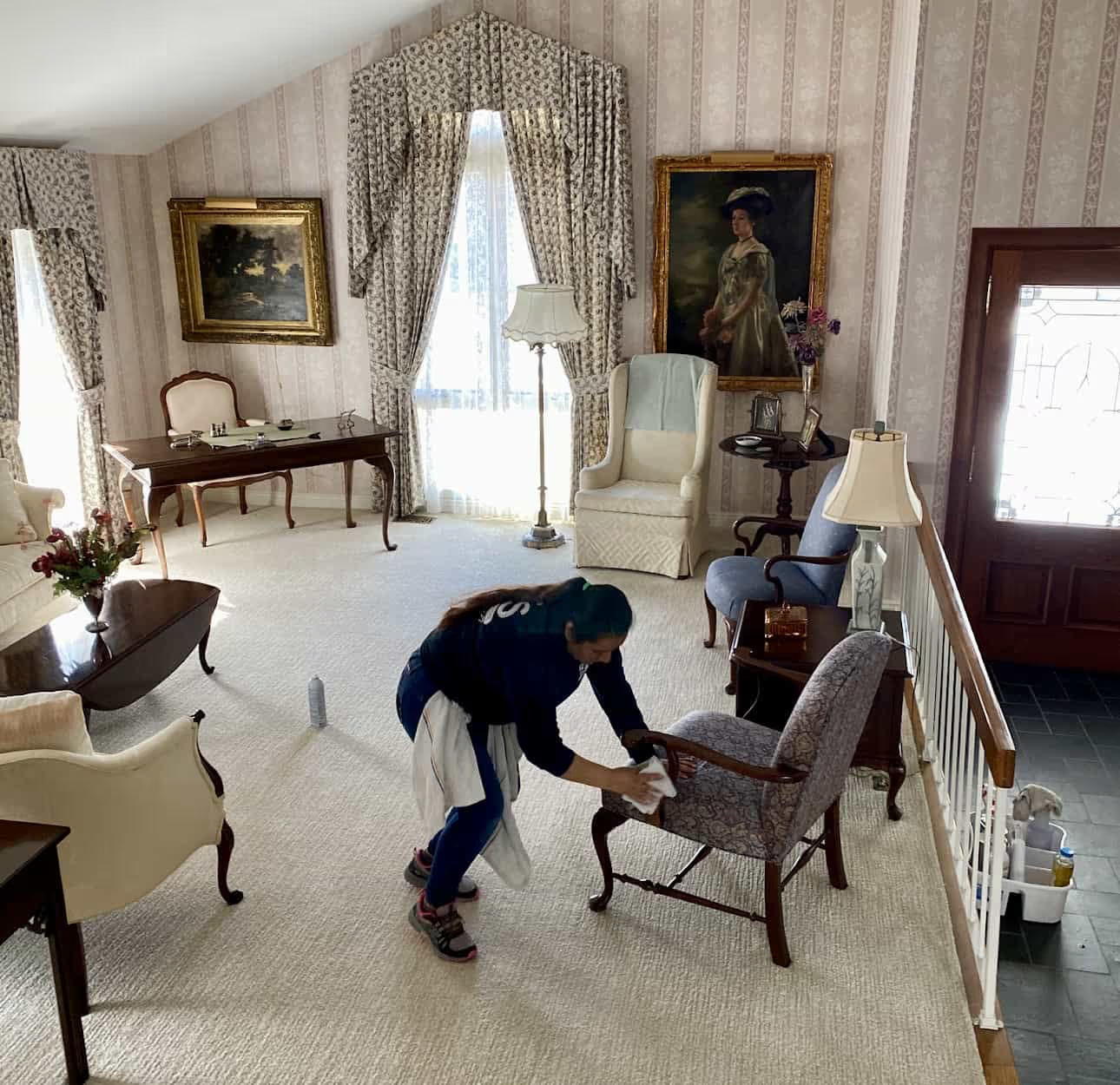
For carpets and upholstery, hot water extraction or professional steam cleaning reaches far deeper than a household vacuum. One Vaughan family with kids, dogs and allergies shared how much it helped in our chemical-free steam cleaning story.
If dust returns within a day or two of cleaning, the problem is usually buildup in places a weekly clean does not reach: tops of cabinets, behind appliances, inside vents, under heavy furniture and deep in carpet fibres. A professional deep clean at the start of heating season resets all of those areas at once, so your regular routine only has to maintain them. Many households book one in November and another in spring.
Forced-air heating keeps lifting and moving dust around, and closed windows mean less of it leaves the house. If you dust with a dry cloth or vacuum before dusting, you may also be spreading it rather than removing it.
It depends on the filter type, your home and whether you have pets. Check it regularly during heating season and follow the manufacturer's recommendation. A filter that looks grey and clogged should be replaced, whatever the calendar says.
It can reduce static, which helps dust stop clinging to surfaces, but it does not remove dust. Keep humidity within the recommended range and clean the humidifier often, since an unclean unit can make indoor air worse.
Duct cleaning is a separate service done by HVAC specialists. Start with the simpler steps first: a clean filter, washed vent covers and a thorough room-by-room clean often make the biggest difference.
Super Cleaners provides regular, deep and hot steam cleaning for homes and offices across Toronto, Vaughan, Richmond Hill, Mississauga and the GTA. Request a free quote, email info@thesupercleaning.ca or call (289) 809-9818. Still comparing companies? Read our guide to cleaning services in Toronto first.



Efficient Cleaning, Exceptional Results.
(289)809-98-18 Serving 24/7
info@thesupercleaning.ca